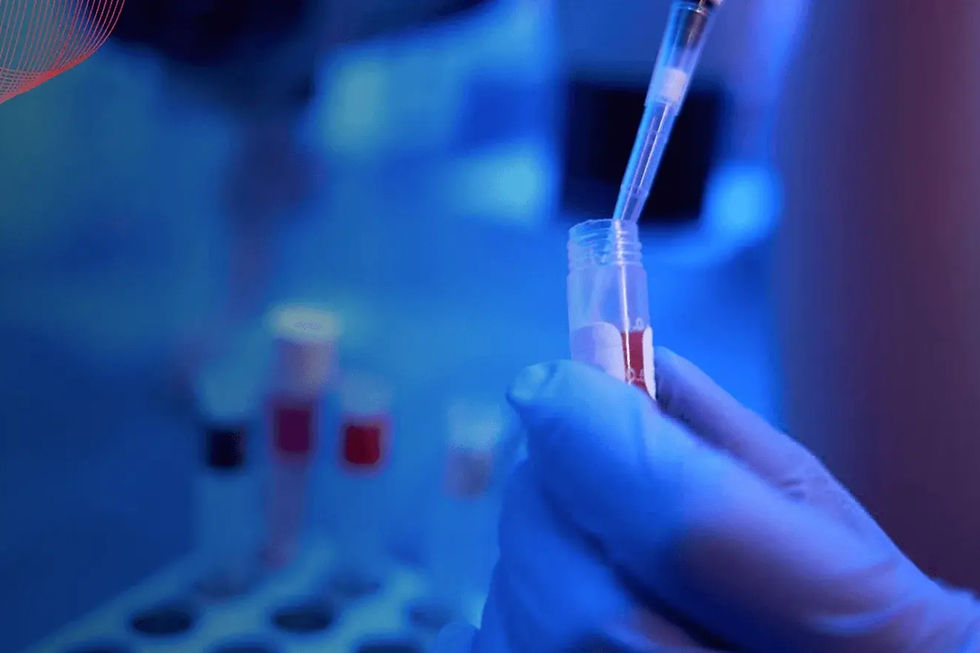
Proteomics International locks in US patent for throat cancer test


Proteomics International Laboratories (ASX: PIQ) , a Western Australian pioneer in predictive medical diagnostics, has attained a major milestone after the US Patent Office granted protection for its innovative PromarkerEso blood test - a first-in-class diagnostic technology designed to detect esophageal adenocarcinoma (EAC) at an early stage.
EAC, as the most common form of esophageal cancer in Western countries, poses a serious health threat.
Typically, the condition develops in the mucus-producing glandular cells in the lower esophagus, above and near the stomach, and often results from chronic gastroesophageal reflux disease (GERD), which affects around 20 per cent of adults in the US. This can lead to a potentially pre-cancerous condition called Barrett’s esophagus.
Gastric reflux occurs when stomach acid flows back up into the alimentary canal - or food pipe - causing symptoms like burning chest pain and regurgitation, often triggered by large meals or certain foods.
While occasional reflux is normal, frequent reflux - more than twice a week – raises concern about GERD, which can be managed with diet and lifestyle changes.
Frequently a silent, unnoticed sleeper-condition in its early stages, EAC is often diagnosed late in as many as 90 per cent of cases, giving rise to a tragically short five-year survival rate of below 20 per cent and a median survival rate of less than a year.
Current screening relies on specialist endoscopy, an invasive and expensive procedure that uses a thin, flexible tube with a camera to image the esophagus and stomach.
The procedure assists in diagnosing medical issues such as pain, bleeding, swallowing difficulties, or inflammation by visually inspecting the linings of the alimentary canal and, if needed, taking tissue samples.
This common day-surgery investigation requires fasting beforehand and usually involves sedation for patient comfort, with a recovery time of about 15-20 minutes for the procedure itself, yet despite the procedure, many EAC cases are still not identified in time.
PromarkerEso works by analysing protein biomarkers in the blood alongside other key clinical factors such as age, sex and body mass index, to deliver a straightforward risk score to guide the need for and urgency of further investigation.
In short, the test offers a simpler, non-invasive alternative and has shown strong accuracy in identifying EAC in clinical studies, even at its early stage.
“This is a significant achievement because the USA is the largest and most advanced healthcare market in the world. Securing patent protection for our diagnostic technology there is a key step in our commercialisation pathway and provides a strong foundation for potential partnerships, licencing, and regulatory advancement.” Proteomics International managing director Dr Richard Lipscombe
The recently granted US patent, titled ‘Glycoprotein Biomarkers for Esophageal Adenocarcinoma and Barrett’s Esophagus and Uses Thereof’, secures intellectual property protection until 28 February 2036.
Patent coverage for PromarkerEso now spans key jurisdictions, including Australia, China, Hong Kong, Europe and the USA, opening the door to commercial sales in the world’s largest healthcare markets, through direct sales, partnerships and licensing deals.
With rising EAC incidence linked to diet and other lifestyle factors, the relatively straightforward predictive Proteomics test addresses an urgent need for less invasive diagnostics to improve patient outcomes at reduced diagnostic and treatment costs.
The US patent grant strengthens Proteomics’ global position in precision diagnostics, paving the way for the company’s PromarkerEso test to reach patients at risk of this often-fatal cancer of the upper digestive tract and potentially save lives through earlier intervention.
Is your ASX-listed company doing something interesting? Contact: office@bullsnbears.com.au