Viking Mines unearths high grade tungsten in old US waste dumps

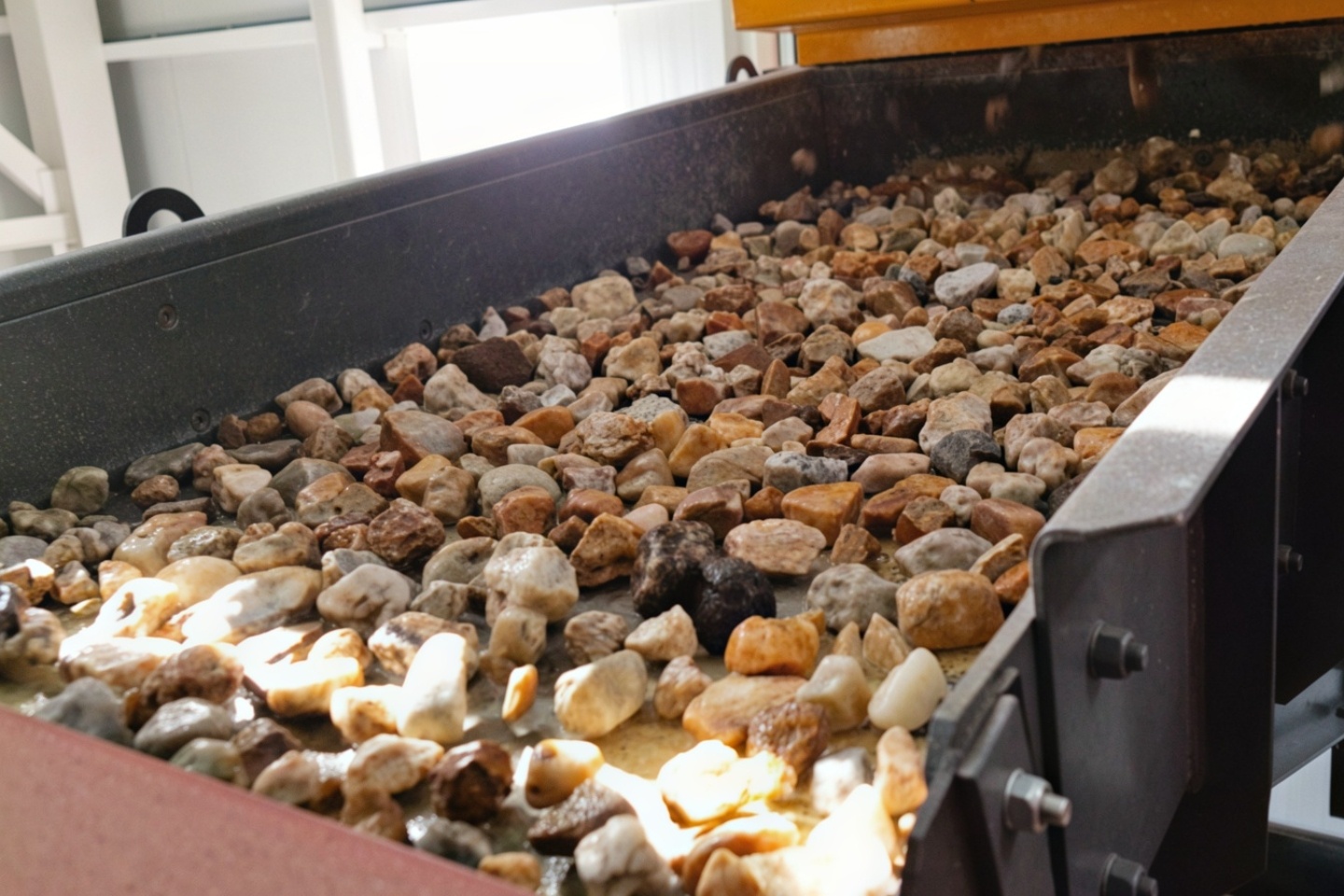
In what is shaping up to be a classic case of one man’s trash being another man’s treasure, Viking Mines (ASX: VKA) has unearthed high-grade tungsten from historical waste dumps at its Linka project in Nevada, USA. The original Linka mine produced tungsten, specifically as the mineral scheelite, or calcium tungstate, which was processed into tungsten trioxide.
Viking's first-pass sampling of stockpiles left behind by miners in the 1950's has returned assays up to 1.8 per cent tungsten trioxide, well above the average grade historically mined at the operation. The timing of the discovery could hardly be better.
With tungsten now designated a critical mineral, Washington is actively supporting the on-shoring of strategic supply chains to reduce its defence and industrial dependence on China. The US government recently signalled an additional US$1.28 billion in lending support for ASX-listed rare earths companies for that very reason, underscoring the policy tailwind behind the nation's domestic critical minerals projects.
Viking’s latest results stem from its phase two field mapping and sampling campaign in May, with 98-samples taken to test the potential of material that was simply discarded as waste eight decades ago. That rejection was primarily because 1950's mining technology lacked the precise, automated sorting and advanced flotation tools available today to effectively separate lower-grade or visually indistinguishable tungsten ore from waste rock.
This first pass was designed to answer one question — is there tungsten in these dumps — and the answer is clearly yes. Viking Mines Managing Director and CEO Julian Woodcock
The company's sampling across three historical rock dump areas appears to have paid off handsomely. Ten samples from the historical mill’s run-of-mine, or “ROM” pad, averaged a solid 0.5 per cent tungsten trioxide, up to an impressive 1.8 per cent.
That average is notably in line with the 0.5 per cent grade that the original Linka mine produced up until its closure in 1956, when the United States government stopped its tungsten buying program.
Two other waste stockpiles adjacent to the historic Conquest mine, an estimated 650 to 800 metres northeast of the main Linka mine, also returned encouraging results. One pile, believed to be stockpiled ore, saw 10 samples average 0.4 per cent tungsten trioxide with a peak grade of 1.4 per cent. A second pile of mixed ore and waste material returned an average of 0.1 per cent tungsten trioxide.
The company says its field observations have confirmed mineralised garnet tactite is intermingled with barren waste rock, suggesting the old-timers simply lacked the tools to efficiently separate the good from the bad. The observation is important, because garnet tactite acts as the primary host rock and geological indicator for high-grade tungsten mineralisation.
Tactite, also known as skarn, forms when iron- and silica-rich hydrothermal fluids from a granitic intrusion react with surrounding carbonate rocks, such as limestone. Within that environment, garnet-rich tactite serves several critical functions in the formation and discovery of tungsten ore.
Those functions include enabling identification of the host rock medium in which the primary tungsten ore mineral scheelite is directly deposited and finely disseminated within the matrix of garnet tactite lenses.
Exploration data also reveals a direct chemical correlation, where iron-rich garnets selectively concentrate and separate tungsten out of early ore-forming fluids and trap it inside the developing garnet tactite rock. As a result, mineralised garnet tactite typically forms in the core or nearby zones of a skarn system, closest to the heat source.
Because of this tight geological coupling, modern mineral exploration targets garnet-bearing tactite outcrops as a primary mapping guide.
This is the point where modern technology comes to the fore. Viking believes the stockpiles are a prime candidate for sensor-based ore sorting, a technology capable of rapidly separating mineralised rock from waste. The company has already completed sorting testwork at the German headquarters of industry leader TOMRA, with results expected shortly.
These results confirm what our field team observed under UV light in May – the historical operators left tungsten behind. Two of the three areas we sampled are rock stockpile waste dumps from the original mining, yet they returned assays up to 1.8% WO3. That is mineralised material sitting at surface, already mined once, that was simply discarded because the tools to recover it didn’t exist 80 years ago. Viking Mines Managing Director and CEO Julian Woodcock
Viking says further systematic sampling will now establish representative grades and the TOMRA ore sorting testwork which is nearing completion will determine if the old dump material can be efficiently upgraded.
In addition to the stockpile sampling, Viking has also resampled six historical trenches and road cuttings. The work has confirmed multiple zones of tungsten at surface, including a one metre hit going 1.3 per cent tungsten trioxide, a 3m intercept grading 0.5 per cent tungsten trioxide and a wider 5m zone at 0.4 per cent tungsten trioxide.
Overall, the results provide solid validation ahead of the company’s maiden drill campaign at Linka, which kicked off in late July and is ongoing.
The Linka project comprises three historically producing tungsten mines that ceased operations in 1956 due to low tungsten prices and the cessation of the US government's tungsten purchasing program, not a lack of ore. Viking is pursuing a brownfields restart, building on substantial existing infrastructure in a tier-one jurisdiction.
Recent metallurgical work has already demonstrated the potential, producing a 56.9 per cent tungsten trioxide concentrate grade from a 1.2 per cent tungsten trioxide feed grade, at a solid 76 per cent recovery using conventional gravity and cleaner flotation processing.
With high-grade tungsten sitting on the surface, a maiden drilling campaign underway and modern sorting and processing technologies waiting in the wings, Viking appears to be progressing methodically through its early conceptual and evaluation stages.
If the ore sorter can do its job, the company may have just found a low-cost, fast-tracked path to becoming a domestic US critical minerals producer at the exact time when America needs it most.
Is your ASX-listed company doing something interesting? Contact: office@bullsnbears.com.au


