Infini Resources survey lights up multiple Canadian uranium drill targets

Infini Resources (ASX: I88) has added another layer of technical polish to its Portland Creek uranium play in Newfoundland, Canada, completing a high-resolution airborne radiometric survey as boots hit the ground for the company’s next round of fieldwork.
The company says the new heliborne geophysical survey has added a modern radiometric dataset across its expanded 329-square-kilometre Portland Creek tenement package. The results will be incorporated into existing magnetic and electromagnetic data to improve the focus on its upcoming phase three diamond drill targets.
The survey was flown by Axiom Exploration Group across 737 line kilometres on 200m-spaced flight lines at a height of between 40m and 65m above ground.
Infini says the data is already helping to map major fault sets, structural intersections, demagnetised zones and radiometric uranium anomalies across what it believes could be a district-scale uranium system.
The latest work follows Infini’s late-May update, in which the company reported completing 2230 flight-line kilometres of airborne electromagnetic and magnetic surveying, confirming uranium enrichment over more than 6km of strike from its phase two drilling dataset.
The airborne data did not identify any significant discrete bedrock conductors in the survey area. However, Infini says this supports its thinking that Portland Creek’s uranium is more likely hosted in structurally controlled granite-fractured networks rather than in conductive sulphides or graphitic rocks.
Magnetically low zones are interpreted as possibly reflecting magnetite-to-hematite alteration halos, which might be linked to uranium-rich hydrothermal fluids.
When these haloes are paired with radiometric highs and historical lake sediment and soil geochemistry, the company says they provide a clearer roadmap for ranking structural corridors and anomaly clusters.
With the radiometric survey now complete and our field crews on the ground, we are moving into the next phase of systematically unlocking Portland Creek’s potential as a structurally controlled, district‑scale uranium system. Infini Resources CEO Rohan Bone
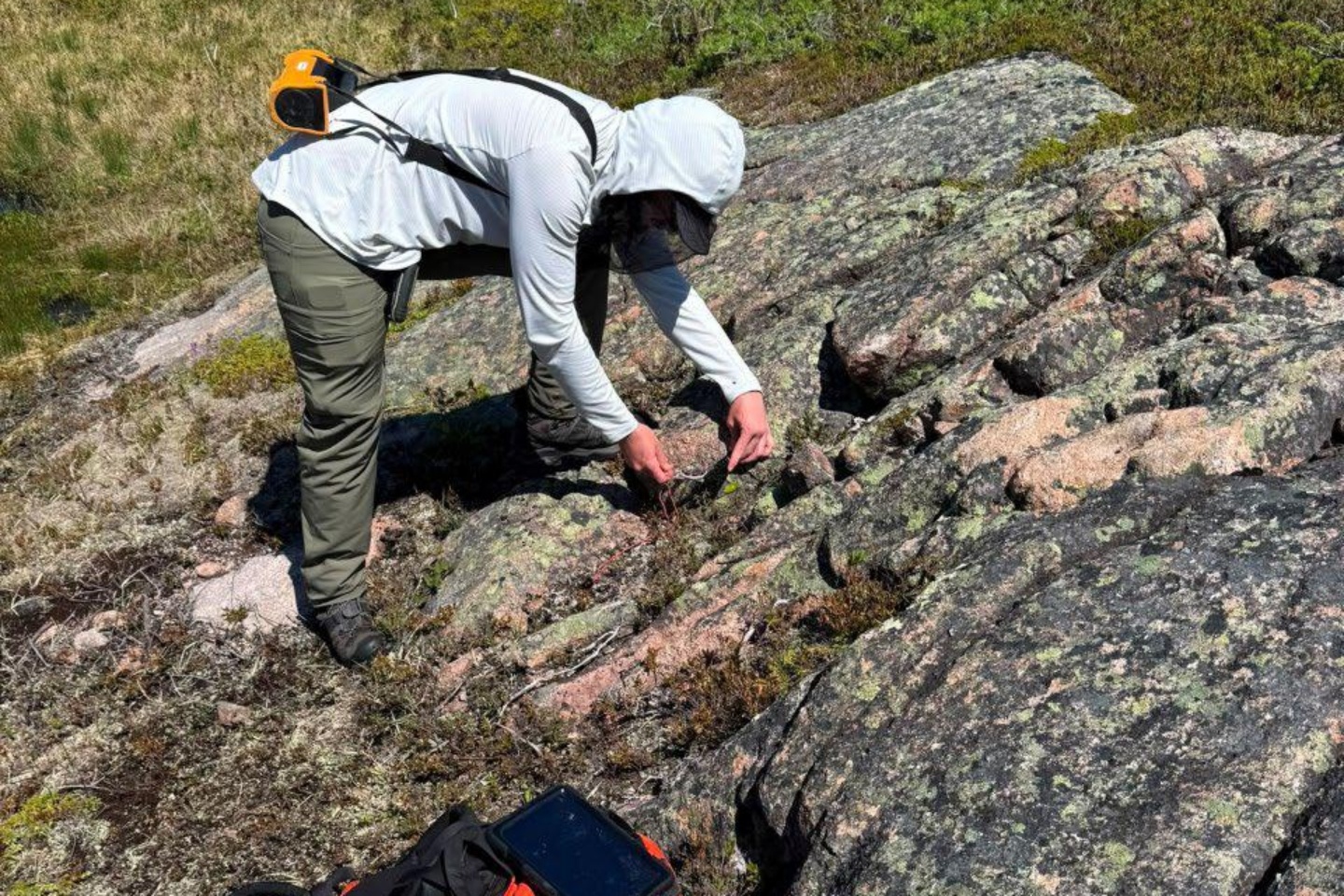
Geological crews are now on site mapping, prospecting and sampling priority radiometric anomalies. The work is targeting outcropping faults, fracture networks and breccia bodies, particularly where demagnetised zones, radiometric highs and uranium-in-soil anomalies overlap.
Rock chip and selective soil sampling will also test for hydrothermal alteration and pathfinder elements, including molybdenum, zinc and copper, with the results to be fed directly into its phase three drill planning.
Infini’s Portland Creek project sits in the Precambrian Long-Range Complex in Newfoundland and extends over a large regional uranium anomaly first picked up in rock-chip and boulder sampling in the 1970’s.
Infini says that both historic and more recent work has outlined a 6km-long zone of anomalous uranium and radon gas in lake sediments, soils, and airborne radiometrics. One 1970’s uranium sample was recorded in the Newfoundland Mineral Deposit Index, going a remarkable 2180 parts per million (ppm) uranium oxide.
Follow-up work by Infini has verified historical uranium anomalies and completed a soil sampling grid over the Falls Lake Prospect, previously referred to as the Talus Prospect.
The work has defined an 800m-by-100m high-grade uranium anomaly, with a whopping result of 74,997ppm (7.5 per cent) uranium oxide. That anomaly is located along the ancient ice-flow path and west of a 1.5km-sized radiometric anomaly.
Infini has also identified a southern 500m-wide cluster of high-grade soil samples, with peak values of 1500 ppm uranium oxide, 1.5km from the company’s recently completed phase two drill program.
The company’s phase three diamond drilling program is slated for the September quarter and is shaping up as the first big test of its recently integrated geological, geochemical and geophysical modelling.
It will target significant parts of the district-scale, structurally controlled Portland Creek uranium-hosting system.
If the next round of drilling can turn all of Infini’s technical groundwork into strong, cohesive hits, Portland Creek could quickly become a sharper talking point in Canada’s uranium sector.
Is your ASX-listed company doing something interesting? Contact: office@bullsnbears.com.au


