Mount Ridley Mines unlocks secret to Esperance rare earths project

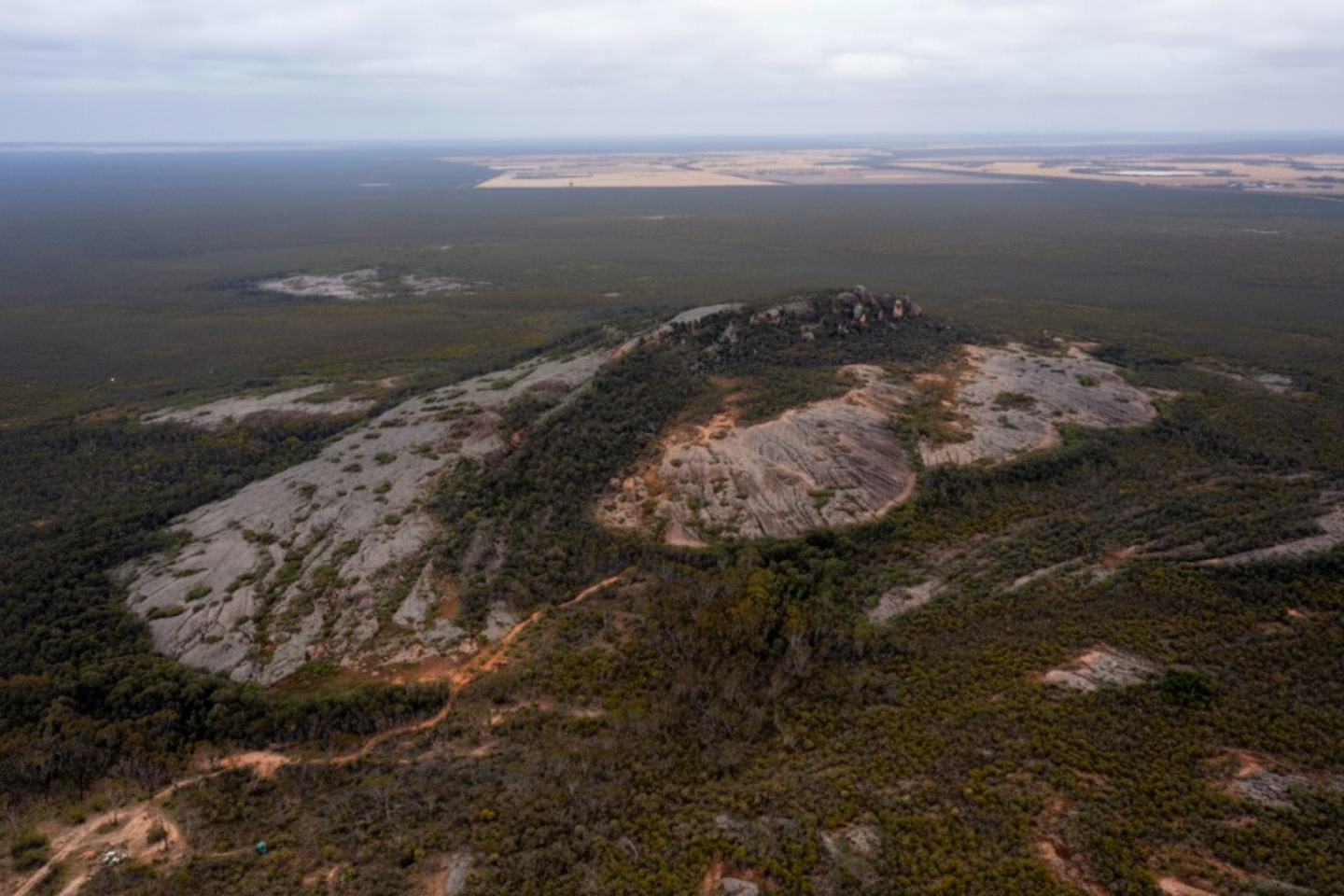
Mount Ridley Mines (ASX: MRD) has delivered the first direct evidence of how rare earth elements are hosted at its Grass Patch project near Esperance, confirming they occur within discrete free-digging phosphate minerals that could crucially unlock a more economic pathway for processing.
In the world of rare earths, finding a deposit is only half the battle, the real challenge lies in figuring out how to economically separate the valuable elements from the surrounding minerals, a complex chemical flowsheet that ultimately decides a project's viability.
A "TESCAN" integrated mineral analyser (TIMA) was used to scan sample material from Mount Ridley's flagship Grass Patch project and has confirmed its clay-hosted rare earths are almost entirely featured within three distinct phosphate minerals: xenotime, crandallite group phosphates and monazite.
The composite sample for the TIMA study was sourced from five diamond drill holes within the project’s free-dig profile, taken from depths between 18m and 37m.
The company says xenotime was the most common of the three identified and that fine-grained phosphates are closely associated with its clay, consistent with the project’s shallow, weathered regolith.
The most promising part of the findings is that they open the door to using flotation processing to concentrate the rare earths into a smaller, higher-grade products before the more complex and chemically costly leaching stage.
By potentially upgrading the ore early, Mount Ridley could significantly reduce the volume of material fed into its downstream processing circuit, a move it says could have a considerable impact on both upfront capital and operating costs.
The company will now fast-track bench-scale liberation and flotation testwork to determine achievable concentrate grades and recoveries. Work it says that will run in parallel with its broader ongoing phase 1 metallurgical program.
The TIMA results inform us exactly how the rare earths sit in our deposit. Some of our peers have had outstanding results applying flotation to comparable regolith hosted HREE deposits and these results provide a basis for Mount Ridley to investigate a similar beneficiation pathway. Mount Ridley Mines Managing Director and CEO Allister Caird
The Grass Patch project is located just 25 kilometres north of the deep-water port of Esperance and already boasts a monster JORC-compliant resource, standing at 367.98 million tonnes (Mt) grading 57.3ppm of scandium, in addition to its hefty 122.5Mt resource grading 889 parts per million (ppm) total rare earth oxide (TREO) and its eye watering 838.7Mt resource running at 39.5ppm gallium oxide.
The project’s scandium resource is particularly noteworthy. Scandium is classified as a critical mineral by Australia, the United States and the European Union, with global supply under pressure after China imposed export controls on its critical minerals last year.
With demand for the lightweight, high-strength metal forecast to grow at a compound annual rate of 14.5 per cent through to 2031, any new large-scale sources from allied nations such as Australia are almost certainly going to be highly sought after.
For an explorer, understanding the mineralogy of a deposit is like being handed the instruction manual. While many can point to tonnes in the ground, the game is increasingly won by those who can prove up a cost-effective way to get them out.
With its rare earths now defined within phosphate minerals, Mount Ridley may have found its processing secret sauce. The upcoming flotation tests will show just how well it can use that key ingredient to unlock the value at Grass Patch.
Is your ASX-listed company doing something interesting? Contact: office@bullsnbears.com.au


