Sarytogan Graphite reveals $190M Kazakh graphite plan spanning 50 years

Sarytogan Graphite (ASX: SGA) has unveiled a cracking definitive feasibility study (DFS) for the upstream component of its mammoth graphite deposit in central Kazakhstan, outlining a low-cost, long-life operation with a pre-tax net present value (NPV) of US$132.7 million (A$189.6M) using an eight per cent discount rate.
The initial 50,000-tonne production profile is slated for three distinct markets. The company plans to sell 20,000 tonnes annually into the drilling fluids, lubricants and friction products markets, with another 10,000 tonnes of unclassified concentrate aimed at the foundry and iron recarburizer sector.
The remaining 20,000 tonnes will be earmarked as feedstock for Sarytogan’s own planned downstream business, designed to produce high-value ultra-high purity fines and coated spherical purified graphite for the burgeoning advanced battery market.
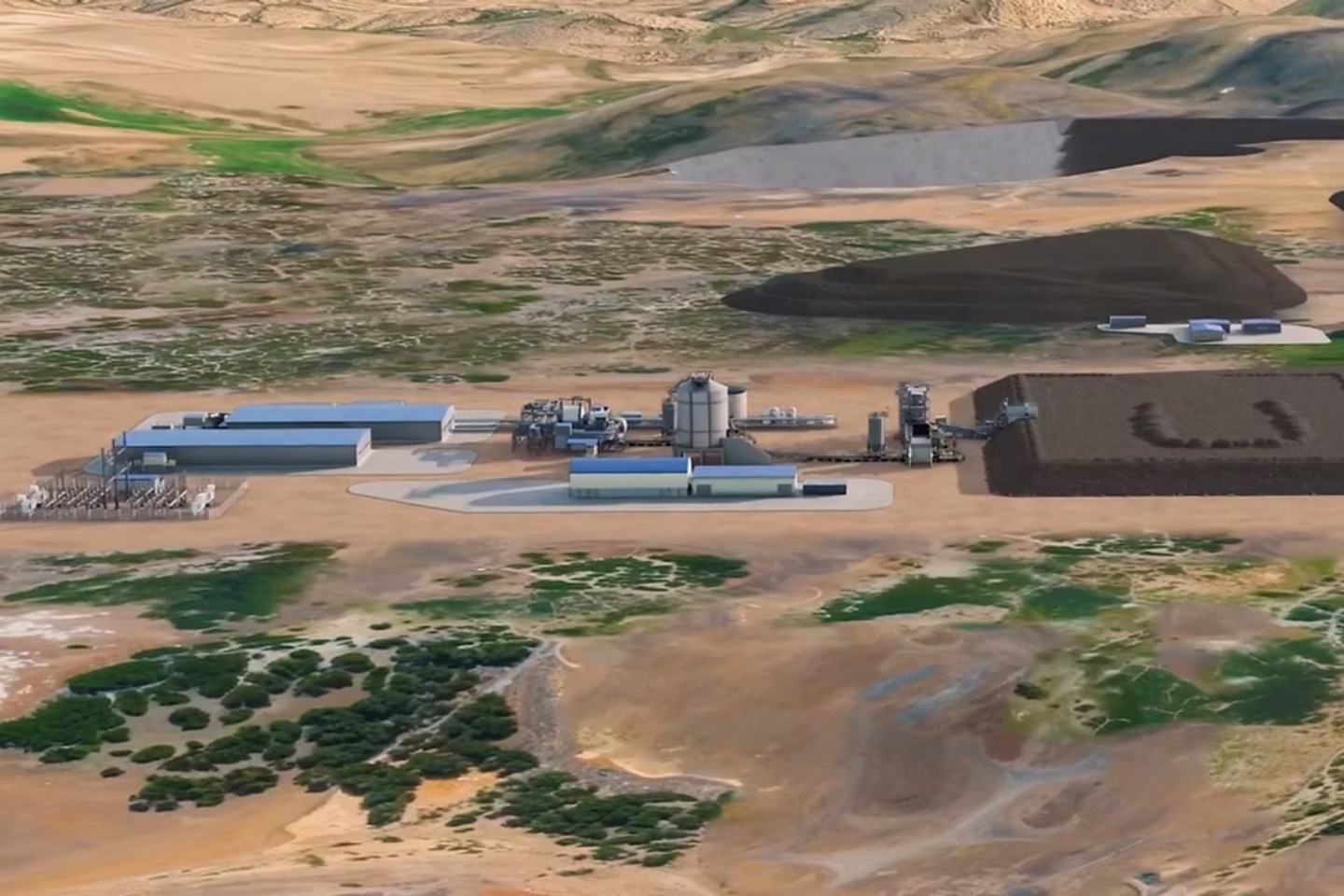
The study maps out a graphite concentrate operation requiring a relatively modest capital outlay of just US$80.5 million (A$114.86M). The project is forecast to deliver a solid pre-tax internal rate of return (IRR) of 19.8 per cent and a healthy earnings before tax and depreciation (EBITDA) margin of 51 per cent, based on the average selling price of US$805 (A$1148) per tonne. The company says this is underpinned by an exceptionally low operating cost of just US$364 (A$519) per tonne of concentrate.
The DFS is based on a formidable ore reserve of 14.5Mt grading an impressive 29.1 per cent total graphitic carbon (TGC). This includes a higher-grade component of 8.9Mt running at a stunning 31.8 per cent TGC.
Sarytogan’s position as one of the largest, highest-grade and lowest-cost graphite developments outside of China is reaffirmed. Sarytogan Graphite Managing Director Sean Gregory
Remarkably, the planned 50-year-plus mine life will process just 8.5Mt of this high-grade material, consuming less than four per cent of the project’s colossal 225Mt mineral resource. It suggests the initial mine plan will barely lay a glove on what is one of the largest and highest-grade graphite deposits outside of China.
To further de-risk the project’s construction, Sarytogan secured a savvy lump-sum turn-key construction quotation from Yantai Jinpeng, a Chinese engineering firm with recent experience building graphite plants in Tanzania and Mozambique.
Notably, Sarytogan says its operating cost of US$364 (A$519) per tonne positions the project amongst the lowest-cost non-Chinese graphite mines, a crucial advantage in a sector often subject to commodity price cycles.
The Upstream DFS, informed by high-quality technical studies by international and local engineering experts, advances and de-risks the project development pathway for the Sarytogan Graphite project. The next steps now include a DFS on the downstream project, further environmental and social studies for international banks,ongoing battery and other end -user product testing and offtake discussions. Sarytogan Graphite Managing Director Sean Gregory
While the upstream DFS numbers are impressive, the big prize appears to lie in the downstream processing potential. A prefeasibility study from 2024 highlighted that an additional downstream investment of US$194 million (A$277 million) could unlock a staggering incremental pre-tax NPV of US$367 million (A$524 million).
This massive downstream potential is backed by some impressive metallurgical results. Testwork has already produced battery-grade coated spherical purified graphite that smashes key industry specifications, achieving a purity greater than 99.99 per cent, the coveted “four nines” mark.
The process also delivered a hefty 97.7 per cent yield, well above the typical industry range of 50 to 60 per cent and a tap density of up to 1.26 grams per cubic centimetre (g/cm³). Tap density measures how tightly graphite powder packs when vibrated and has settled, with the unusually high result potentially paving the way for greater energy density in lithium-ion batteries.
The company’s strategic location in Kazakhstan places it squarely between the graphite-hungry markets of Europe and China and its global significance has not gone unnoticed. With geopolitical winds shifting, the European Union has already identified graphite as a critical raw material and in 2025 designated Sarytogan’s project as a “Strategic Project” under its Critical Raw Materials Act. Adding further institutional weight, the European Bank for Reconstruction and Development tipped in A$1.4 million via a placement last year to help advance the venture.
However, graphite may be only one string to Sarytogan’s bow. Just 25 kilometres away from its world-class graphite deposit, the company is quietly proving up a large-scale copper porphyry system at its Baynazar project. Recent drilling at the Ilksan prospect returned a huge 452-metre copper intercept averaging 0.063 per cent from surface, building on previous long hits of 229m at 0.14 per cent and 318m at similar grades, adding weight to the prospect of a significant, bulk-tonnage discovery in a region known for its low-cost copper mines.
With a compelling upstream DFS now in hand, Sarytogan appears to have built a robust foundation for its entry into the graphite market. However, it's the layers built on top of that foundation that could really cause pulses to quicken.
The company has already demonstrated it can produce an exceptional-quality battery-anode product, has attracted capital from European institutions and is now uncovering a potentially massive copper system next door. Sarytogan seems to be putting together a two-pronged resource strategy in the heart of Central Asia that could become increasingly difficult to ignore.
Is your ASX-listed company doing something interesting? Contact: office@bullsnbears.com.au